
In our prayer team devotion time recently, our leader read about the prophetess, Anna, whom Luke recorded as a widow who “did not depart from the …
Anna’s Legacy – The Secret Ingredient to Joy
Spirit is the wellspring from which everything else emerges: It is pure light.—Alberto Villoldo, Ph.D.
In our prayer team devotion time recently, our leader read about the prophetess, Anna, whom Luke recorded as a widow who “did not depart from the …
Anna’s Legacy – The Secret Ingredient to Joy
I have always felt that each woman needs at least 7 other women in their lives who will listen, advise, hold them up, light the way. This is the first in a line of essays where I honor the strong women who have provided a light for my path, be it one moment of for years. I met Edna only once, but she made such an impression…
A vision in dark brown cotton from head to toe smiled from across the freshly swept yard. Her homemade dress was buttoned up to the neck and reached all the way down to her ankles. She wore a brown sweater. A matching brown bonnet covered her head. Her boots were supportive of mountain walking. It was evident that everyone here revered Edna as a matriarch. She was bombarded with a flood of grandchildren, nieces, nephews and neighbors rushing up to give her a hug. Once a year, near her birthday, people stop by to pay their respects. Bearing food and musical instruments, they have come to stay the day. I accompanied my friend Barb for what she called, “walking up the holler a-ways to a singin.”
I knew the minute I met Edna she was something special. She was surrounded by an energy that was evident to me. I felt it. I don’t read auras, but if I did hers would be bright. After a bit of chit chat with my friend Barb about how she’d been, Edna took my hand. A pool of water formed in her eyes and she said, “I know you by your touch. Praise Jesus. I can feel Him in you.” She didn’t let go of my hand for some time and pulled me around the yard introducing me to her family, being as though I’d never been there before. Her brother Joe, seemingly well known in the bluegrass music crowd, was entertaining a gathering on the porch of a log cabin. She lived out of the far reaches of electricity or indoor plumbing, off the grid you might say, but had all the amenities needed for a strong healthy life.
She wanted to show me things, like the treadmill her son had made. A horse walking the treadmill turned a long pole which was attached to the handle of an ice cream freezer. “You can churn with this or anything,” she said. “Isn’t it great?” She was proud of her life and proud of her children.
“How many children do you have?” I asked.
“Seven. They’re all real smart about this mountain and can do anything it takes to live. I taught them that. Respect the mountain and it respects you, gives you a good life.” Then she leaned in, “But, they ain’t had no education. I wouldn’t let’em go,” she whispered.
“They do have an education, though, about life,” I said. She smiled.
“You’re right,” Edna said. “God told me to come up on this mountain and live and raise my kids and He would provide what we needed, so I did. I take care of His Mountain and He takes care of me. I’m the only one knows how to keep this place clean.”
She told me of getting married and moving north to Ohio as part of the out migration looking for jobs. “I had no business being up there,” she said. “It made me sick.” Her words echoed feelings I’d heard before, being a southern girl and all. “The doctors said I had cancer,” she continued. “They gave me three months to live, but God told me to get back to the mountains and I’d be okay. That was fifty years ago.” Her faith was unshakable. Being in her presence brought me a sense of peace.
She and her family are squatters on wild mountain property. She says, “You can live on it, but you can’t own it,” and “The less the government knows about you, the better.” She doesn’t believe in deeds or government assistance.
“How many grandchildren?” I asked.
“Honey, I think its twenty-two if they ain’t slipped no more in on me since I last counted. They’re spread all over. Most of them will be here today, though. I even have some in-laws coming in from Ohio. That should be fun. They don’t know why I like to live up here. They’re town people. I always like to show’em my fancy outhouse.”
A young man walked up with a big smile on his face and hugged Edna.
“Hey, Granny, how are you?” he said. He wore a black AC/DC shirt and tight straight legged black pants, and his dyed blue/black hair hung over part of his face. His ears were pierced.
“I guess you heard I fell,” she said. “I broke a rib, punctured my lung.” She held her side to show him where it hurt.
“I heard that,” he said. His arms wrapped around her in a protective and loving hug. “I hope you learned a lesson from that, wandering around up here all by yourself.”
“Honey, the lesson ain’t for me. God lets me be a lesson to others. I prayed real hard for God to get me out of that ditch. He commenced to healing me and brought me home. I’m almost as good as new. The lesson’s for you. It’s about faith.” He laughed and kissed her on the cheek then moved on to talk to his cousins. Edna didn’t judge him or scold him or any of the others. She accepted them and loved them and they loved her.
“Do you ever leave the holler?” I said.
“Oh, yes, honey, I go up on the mountain and over to the cave, and sometimes I go over to another holler where my girls live. I travel all over these hills. I have two or three places in different hollers where I sleep.” It wasn’t exactly what I meant, but I got my answer.
The log cabin her son had built with hand hewn logs was plainly elegant with a full wrap around porch. It was placed in a wide clearing in the deep woods near the creek bed road we had foot traveled earlier. He had one room dedicated to the food he canned and preserved from his own garden, enough to last all year. A Lincoln style wood plank fence enclosed pastures of horses; some were being ridden by the grand-children. A hay wagon in the yard became a table for all the food being brought in by the arm-loads. The vivid greens of the grass, trees and hills reminded me of a lush spring though it was near the end of summer. Not the hot browned look of our burned-up city lawns looking for relief. The creek we had followed sang to us as water flowed over rounded rocks. With no unsightly electric wires, cell-phone towers or satellite dishes it was easy to transport ourselves into another century.
My grandparents were dead before I was born, though I experienced summers on the family farm without utilities. Playing at the springhouse, catching rain-water in a barrel and decorating an outdoor toilet made me appreciate what it takes to live. I am grateful I was able to connect to my grandparents’ way of life.
“So, you don’t live here with your son?”
“No, honey, I have my own place, several places really.”
“Tell me about the cave,” I said.
“There’s a cave with a spring in it. That’s where we used to do our laundry. I make a bed in there with a sleeping bag. Sometimes I stay there two or three days.”
“What do you do there, while you’re waiting on your laundry to dry?” I asked.
“I pray.” She pointed to an attractive woman, mid-thirties, with long, loose blond curls hanging over her shoulder. She wore a red blouse and dress pants. “When that young’un there was little enough to fit in the sleeping bag with me, we both went up there and stayed. I came out one time and found snow about yay deep.” She put her hands about twelve inches apart. “I’m real lucky my kids let me do what I want.”
“How old are you, Edna?” I asked.
“I’ll be seventy-nine, August the ninth.”
“Do they worry about you a lot?”
“Sometimes I have to wait till they’re all gone if I want to climb on the roof or something. They fuss about that. They know how to find me, though, if I ain’t home. I’m usually at the cave. But that cabin on the mountain is where God wants me most of the time. It’s a place we used to have services. People from all over these hills came up there to sing and pray.” Edna had a yard full of guests, easily over a hundred, many of whom had transported themselves into her holler by horse or foot so it wasn’t hard to imagine she was telling the truth. “One time, I was worried about food and God told me he’d provide me all the food I wanted. Don’t you know, swarms of bees moved into that cabin with me and stayed up in the ceiling between the cardboard and the tin. I used cardboard you know, like people do to insulate the inside of the cabin. Some stopped coming up there cause they were scared of the bees but they didn’t bother me none so I left’em alone and before long I had the prettiest honey combs you ever did see. That honey tasted sweet, like the butter had already been added. People came then I reckon cause they wanted my honey.” She laughed at the memory. “That’s how God provides for me.” We meandered around the yard arm in arm looking at the handiwork of God and Edna’s children. The whole scene was like a memory I’d forgotten to have. I wanted to hold it close, study it so it wouldn’t slip away.
“Do you have any preachers in your family?” I don’t know why I asked that but she seemed like an incarnation of…well, something. I just wondered what religion she claimed.
“My uncle called himself a Holy Ghost preacher. Some people call them Holiness. But, I don’t go in for all that. People didn’t used to care what you called yourself as long as you belonged to God. I think God don’t care what you are as long as you’re listening to Him. And, I listen honey, Praise God!” Tears seemed always just behind her soft eyes as she squeezed my hand. “God walks beside me all the time, invisible. Some people can’t see it. But you see it. I can tell because He walks with you, too.”
Barb came along and reminded me that I had to be back in town by 2:00 p.m. I had completely forgotten to check my watch. Somehow it didn’t seem important anymore. I could have stayed all day and night talking to Edna. I realized I must be monopolizing her time with her family so I made a move to leave. I hugged her and said I’d best be going. I felt so connected to Edna I wanted to be related to her. I wanted to be her.
“Can I come back and see you some time?” I said. “I want to talk to you about signs.”
“Oh yes, honey. They’s signs and you need to know’em.” I got the feeling Edna knew things about me that I didn’t know myself, that there was a collective presence here today, in both of us. “God tells us everything we need to know. It’s up to us to listen,” Edna said. “But, don’t wait too long about gettin’ back up here,” she squeezed my hand again, “Hear me?”
“How will I let you know I’m coming?”
“You call my daughter, “Dee,” she’s the only one with a phone. She lives out on the road. She’ll tell you where to find me.” It was the daughter who’d spent nights with her in the cave when she was little, now obviously a woman of the modern age.
“If you come back up here to see Mama, better plan on staying a couple of days,” Dee said. “Call me and I’ll tell her you’re coming.”
They had a message system. An old push-mower, the kind without the motor and with a box attached to the back for tools sits at the bottom of the hill beneath Edna’s cabin. She puts a note in the toolbox if she needs something and the children put a note in there if they want her to come down to see them or need to get her a message when she’s not home.
The realization that she was truly off the grid was just forming in my mind. I knew Barb had said she homesteaded her place, and home-schooled her children way before it was a fad, but she truly did live outside the lines. I learned also that she birthed her children at home and they did not have social security numbers.
“If I’m not home, I’ll leave red strings tied to the tree limbs so you can follow. I might be at the cave.” I have to admit it scared me a little bit, to think about trekking all over this mountain by myself, following red strings to find Edna, though I hoped I had it in me.
I wanted to imagine I’d finally met my grandmother or maybe even several generations of grandmothers. I couldn’t get enough of her. I forgot about my at home to-do lists and expectations and remembered ancestral things I once knew but had let slip away. I felt a sacred whisper flowing through my veins and I was grateful.
It took thirty minutes walking a fast clip back to the place we’d abandoned the car and at least another thirty to drive back to town. I didn’t talk but inhaled as much of Edna as I could. All I could think of was coming back. I wanted to tell everyone about this hidden treasure of times past as if I’d discovered her myself, but at the same time didn’t want anyone spoiling what she had accomplished, as if it were my job to protect her secrets. Her simple lifestyle relying on intuition and signs to guide her daily decisions comes from being totally in touch with her mountain roots. Roots I share but skills yet to be honed.
On our way out, people continued to trek back into the holler and Barb explained there would probably be 400 people by the end of the day. My secret treasure wasn’t a secret.
“Dolly Parton has even been here,” Barb said. “Edna’s grand-daughter breaks and trains all Dolly’s horses.”
“You’re kidding,” I said. “I should write a story about her.”
“Everybody’s written about her. There’s a whole chapter in a textbook at Appalachian State University.” I felt like I had been spiritually blind and this was a day of vision.
Edna is a monument, a mountain of faith. She doesn’t have to leave her holler or travel the earth to become wise or make a difference. She only has to listen to the earth as it speaks to her. I was only with her for a short while, but she saw me and I saw her and it made a difference. She is not a traveler, she is a destination.
(This essay was written in 2006. Edna has been gone for several years now, but she is still remembered.)
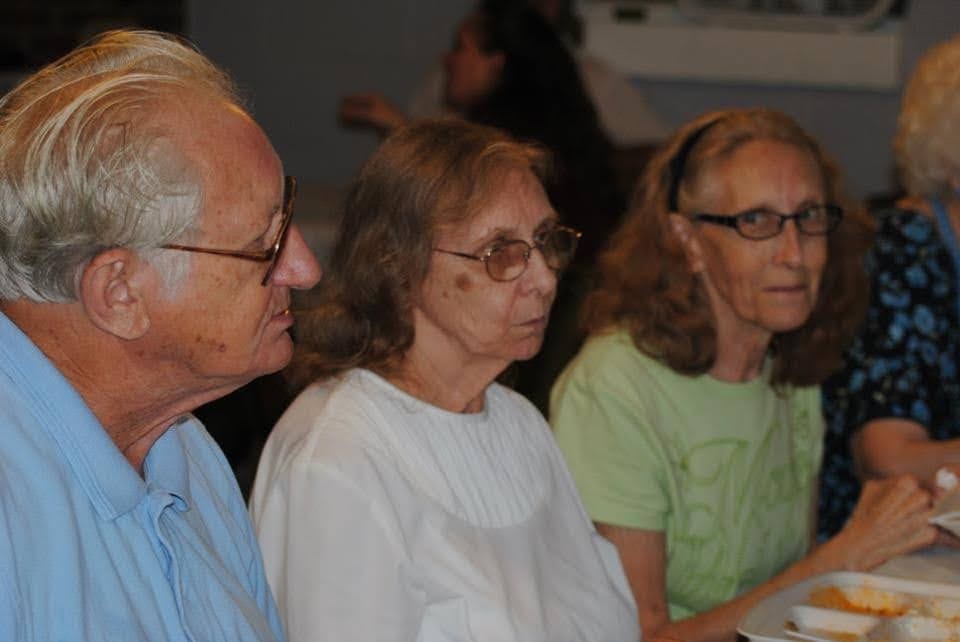
I wrote this essay many years ago to have a laugh with and about my father. He liked this essay and bragged to his friends that I used him as a muse for my stories. One of his greatest attributes was being able to laugh at himself and tell his own embarrassing stories.
When Dad had by-pass surgery, Mom’s company was all he wanted. He was like a child, scared to let Mom out of his sight. Having his tender heart manhandled did a real number on his psyche. The rest of us became pegs looking for a hole to fill. How to help him became how to help Mom while she was sitting beside Dad. On one of my visits, I chose to tackle the kitchen.
I started by washing the dishes which included more cottage cheese containers and peanut butter jars than I care to remember. My parents could never stand to throw away perfectly good containers, with lids! Throughout my childhood, the dreaded empties lined up on the kitchen counter soaking in soapy water. I always hoped they got washed out before it was my turn at the dishes.
I was sure Mom had a real set of dishes, I’d seen them on birthdays and holidays, but they were hidden behind a multitude of Happy Meal cups, margarine tubs and other designs of reusable ingenuity picked up at the local grocery store or fast-food chain. The rest of the country may live in a throw-away society, but not my folks. They don’t throw anything away. With their grandchildren grown, I felt fairly certain Mom and Dad should be able to use the good stuff without breaking it so I took a few liberties with the cleanout. I imagined how happy Mom would be to find I’d made so much new space in her cabinets. Then, I opened the silverware drawer. I expected to see the complete set of table ware that we’d once collected from inside detergent boxes at A & P. I didn’t know I would have to hunt for it beneath the best KFC and Long John Silvers had to offer, separated by color and stuffed into reused plastic bread sacks wedged between the silverware tray and the side of the drawer, which barely closed.
Being a preacher’s wife meant mom did not have to cook on Sundays. But that didn’t mean she had the day off. After church we visited shut-ins, sick and old, in their homes, in hospitals and nursing homes until supper. ALL of us. Sometimes, if Dad was lucky, a member of his congregation would invite us for a meal after church (saving him money), but, if we were lucky, they wouldn’t. Yes, the home cooked meals were fantastic, but fast food was a rare and festive occasion for us then and Long John Silver’s did not expect the “children to be seen and not heard”.
Dad never failed to remind us to save our plastic forks, “You never know when you’ll want to go on a picnic.” His words still resonate. We never questioned it. We lived in a perpetual state of hope for this thing we saw on television which included a red and white plaid table cloth laid out in the middle of some central park like place and a grand basket filled with fried chicken and deviled eggs, our friends frolicking in the background. There may even be a lake involved. The closest we got to a picnic was riding a wagon behind Dad’s tractor down to the riverbank on our farm to watch skiers skim the water on weekends. Mom probably packed sandwiches. Not a bad adventure but we didn’t need plastic forks for that. I wonder if plastic dinnerware is considered a collectible antique after twenty years, like cars? I could be rich!
Dad was born in 1928, one of thirteen children.
Recycling wasn’t even a word back then, it was survival. Dad’s skills in saving had been honed to perfection and carried out in our own family. I’m not knocking his frugality; it was a good lesson for me to learn. I still live within my means and re-use everything possible. It’s just that he and Mom kept everything, well past it’s time.
We enjoyed the treasure hunt of yard sales but no treasures were ever found at one of our own. Once my parents were finished with an item, there was no use left in it. Mom wondered why she couldn’t make any money at yard sales like other people did.
This fork collection though! Mom had gone to the grocery, most likely because she needed out of the house for a breath while I was there with Dad. I felt sure she wouldn’t mind so I started pulling the massive collection from every nook and cranny in several kitchen drawers. Unfortunately, Dad’s reclining chair was positioned with a view to the corner of the kitchen where I began.
“Hey, what do you think you’re doing?” he yelled.
“I’m just cleaning up a bit, Dad.”
“You’re not throwing those away, are you?” I recognized his high-pitched agitation voice from my childhood. I turned to look at him.
“I’m thinking about it, Dad. We’re all grown now, why would you need dozens and dozens of plasticware you never use?” I asked.
“You never know…” he began.
“When you’ll want to go on a picnic?” I completed his sentence. He knew he was being called out and I knew I’d overstepped my bounds. Here came that high pitched voice again.
“I have no intention for you to come in here while I’m down and go changing everything around. Does your mother know what you’re up to?”
I knew I was treading on fragile ground, here. I didn’t want to cause him more stress. “Dad, how about this?” I said, “I’ll box them up and label them and you can keep them in storage. But let’s at least clean out these kitchen drawers, can we? I’ll bet Mom would appreciate that. He agreed, albeit reluctantly. I found a shoe box (of course I found a shoe box, they never got thrown away either) and started stuffing all the white forks and knives and spoons into it, realizing I was going to need a second box for the black set.
A couple of months passed with no mention of the ‘cleaning incident’. It was late August and time for our family reunion, which Dad always organized. With his recent open heart surgery, they were going to need some help. Mom phoned to ask what I would bring and let it slip that Dad had volunteered to supply utensils. We both laughed. I should have been glad he’d decided to finally use the things. Or, re-use them as the case may be. I know in my head that plastic can be washed, but somehow the idea of these used plastic forks just bothered me. Who knows, the person I might be eating after could be me—some twenty-five years earlier. It just didn’t seem right.
Dad, one of thirteen children, gifted me with forty-eight first cousins. Reunion Day arrived and so did our relatives, like a gaggle of geese migrating south. Some in fancy cars as if to say we too should have followed them north for better jobs and better lives. I had no intention of telling them about the forks. I actually thought it was a little bit funny. I came, of course, equipped with my own.
Standing in line for food I noticed my cousin Bobby, a local, with a stainless-steel fork sticking out of his back pocket. His mother and my Dad were siblings. I slid in the food line behind him. “I see that,” I whispered, tapping on the fork.
He pulled me aside as if we were about to become traitors to our country. “Listen,” he said, “my mom saves her used plastic forks and brings them to these reunions. I’d be careful if I were you, which one you choose.”
“It’s worse than you think,” I said, laughing, “so does my dad.” I pulled out my fork to show him and we both broke out laughing. He raised an eyebrow and we looked around the room at all those unsuspecting cousins.
“You mean all the plastic ware on that table have been used already?” he said.
“Yep. Should we tell anybody?”
“No way. It’s too late anyway.” Then, we saw Kim, another local, her mother another sister to the two culprits. The three of us had become pretty close as cousins go. We hated to leave her out so we approached as if we had unearthed a murderous family skeleton.
“Kim,” I began, “Bobby and I want to tell you a secret.”
“What’s that?” she grinned.
“My dad and his mom save all their used plastic forks and bring them to this reunion. We brought our own!” We each pulled our stainless-steel forks out of our pockets.
“Why do you think I’m carrying my own soda can?” Kim said, “My mom brings the cups.”
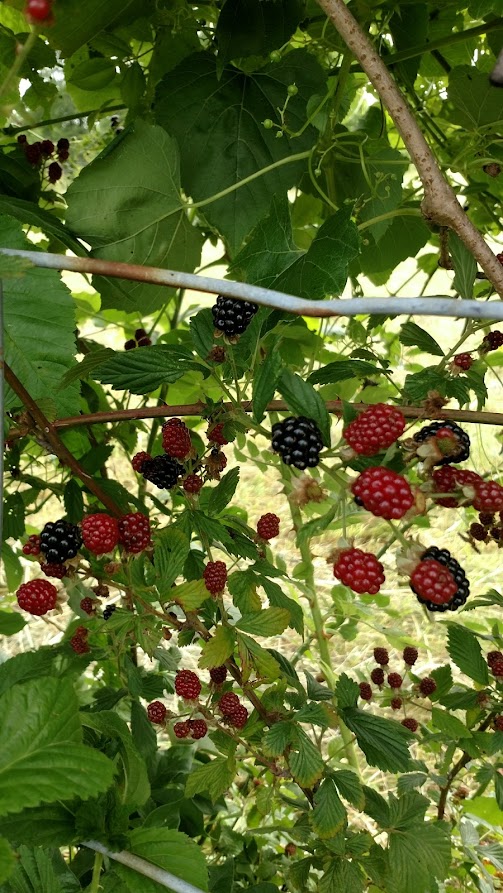
Mom made all our birthdays feel special and never failed to create a celebration for each and every one. These days I don’t find birthdays especially exciting. But nature still finds a way by gifting me the ripening of blackberries. In counting down the days to fresh cobbler I offer this essay from 2007. Although the children referenced in this piece are older, I am not. LOL But, I am a grandmother now so it’s time to pass a few traditions to the next generation.
Donna M. Crow
The nurse remembered Mama, the one with purple fingers, who had her babies in July. Those purple, briar pricked fingers, the first to touch my face, must have left their mark. But, not so anybody would notice, not for a while anyway. It’s like the disappearing ink in the cereal box that only re-appears in certain light, and it’s taken years.
We followed Mama out to the field, buckets in hand to pick enough for canning, making jams and cobblers. I complained about the heat, the briars, the possibility of snakes. Funny how all those dangers disappeared when playing spies, hiding in weeds or climbing trees. I was a poor hand to do any real help for Mama, but I was there. I was convinced blowing real hard would remove the chiggers. My belly filled faster than my pail, but Mama never complained. If we helped even a little, we got credit for it. She bragged on us when Daddy came home from work and sometimes, I believed her myself.
Most times though, Mama donned the early morning path without us, dew heavy on knee high boots, finger holes cut out of gloves, and did more work before we woke up than we ever thought about doing. By the time we woke, the berries were washed and prepared for the next step, and breakfast was ready. I preferred the berries sprinkled with sugar to any cobbler or pie. So, she always saved a bowl out for us to eat while she was preserving the rest for a winter’s feast.
On cold mornings, under heavy quilt, when I was reluctant to get out of bed, Mama spread the taste of summer on fresh homemade bread, near a crackling fire place. Nothing tastes sweeter as your backside warms against a morning fire. I became a human rotisserie, taking such luxury for granted. It’s taken years to appreciate the little things. But what I wouldn’t give on a cold winter’s day for a fire someone else started and homemade bread and jam someone else made. Come December, forget the presents, it’s Mama’s blackberry jam cake that tells me Christmas is here.
Each year now, near my birthday, I watch the berry patches waiting for the first black to appear. When it does, I stop on the trail for the taste that tells me summer has truly arrived. And, the marks of my birthright begin to show, one fingertip at a time as I make plans for the harvest.
Though my teenage daughter has only a slight interest in the berry patch, for now, I can see purple stains splotching her memories. I recognize it in her eyes once the chiggers have been washed off and she’s sitting in front of a fresh bowl straight from the patch. I see it in the winter, when we are weary of the cold and summer is as close as thawing out a bag of wild mountain blackberries. She is proud of making her own pie. This year, we tried dumplings for the first time. She loved them.
But, it’s my married son, who has fully reached the age of appreciation and is often my partner in picking. He is becoming known as a great cobbler maker in his own right, maybe better than me. We don’t settle for only those patches conveniently located. We have gone deeper and higher and found the fattest, juiciest berries, our location top secret. Once the season starts, we check our calendars for every opportunity to hit the woods.
I feel close to God out there, in the thicket, milk jug cut open in the front, handle attached to my belt, leaving both hands free to gather what is given, using nature the way it was intended. I know summer is fleeting and blackberry season lasts only about two weeks. It’s like a fever with me, not wanting to miss a single berry.
I have become a berry picking machine. I never eat while I pick. Sometimes I feel greedy, though, leaving few behind for the birds and snakes. I do little picking at the edge of the path, where the berries have blackened too soon in the sun’s harsh rays. The edge dwellers, rushing to their demise are sometimes knotty, tougher to pluck and bitter to the taste. It’s the ones farther in that catch my eye, make me forget about snakes as I wade deep into the thicket. Only when I become completely entwined in briars stuck on all sides, one with the vine, do I find what I’m looking for. They are a lesson in patience, having rested beneath the shade of a Tulip Poplar leaf, breathing in the cooler mountain air. The sun’s warm rays dancing through the leaves in perfect proportion to the moisture sipped through root straws, a sweet vacation. They are the ones, bigger than my thumb, that fills a gallon jug in ten minutes. They make me reach farther, take chances with footing and fall into holes. They are my berries, put there for me.
I’ve heard it said, “You’ll know who you are, when you know where you’re from.” I believe I am from the blackberry patch, marked at birth, by Mama’s purple fingers.

Beneath the large Black Gum Tree in our front yard, the one whose roots made occasional appearances in the dirt of our Hot Wheels racetracks, my brother David twisted a tire swing around and around until my feet were high off the ground. While he twisted, he whispered to me that the two of us may not belong in this family. He came up with this theory that our real parents had been abducted by aliens because we seemed so different from everyone else in our household. I was inclined to believe him. If it had been my story, told today, I may lean toward he and I being the aliens dropped into this unsuspecting family, because we were two of a kind in a foreign land.
We’d never been told that Mom had been married before, prior to meeting our father. Dad had been helping her raise the two black haired/brown eyed children, whose own father was M.I.A., a few years before David and I came along with our fair-haired English/Irish complexions. By the time I was born, our oldest sister Barbara was almost 12, brother Butch had just turned ten. David had only been scoping out the planet a short while and already had made a few discoveries he couldn’t wait to share, like different rules for different children or how some kids have extra sets of grandparents which translated to extra Christmas presents. I arrived two days after his third birthday and I like to believe he considered me a gift.
Dad held him up in the nursery window where I and some of my future classmates were displayed and asked him which baby he wanted. Born a few weeks late and weighing in at 10 pounds and 21 inches, I was born tall and old. David was in bad need of a compadre and I looked like I was off to a good running start. Even the doctor claimed he’d delivered a three-month old child!
“That big one,” David pointed. Out of a half dozen babies, he picked me!
“Okay, son,” Dad said. “I’ll have them wrap her up, so we can take her home.” For years, David believed it. He liked to remind me that he was the one who sprung me from the hospital and that he could also send me back. (I have since checked the roster for kids who would have been in that window at the same time, and I can say Thank You Brother D for not sending me home with any of their families. Shoo-Weee! Even if ours were abducted by aliens!) For his part, he was happy to have me deflect Barbara’s attention away from dressing him up like a girl.
Barbara was the age most girls are when they begin to pay attention to real babies, too old for dolls, too young for her own children. With two brothers she was primed and ready for another girl. In some ways it seemed I half-belonged to her. Whenever Mom had asked her help with David, she had used him as her dress up doll, putting him in a dress and painting round red circles on his cheeks, a bow in his hair. I was real, better than make believe, however short lived it was. She was over babies and children by the time our youngest addition, Angela, was born four years after me.
With Angela’s arrival we were a family of seven in a five-room house. We tripped over each other and shared every material thing. Besides clothing, sometimes even our thoughts were handed down. When it came to sleeping arrangements, we were divvied up along gender lines in small alcoves on opposite sides of the living room. Until I was six years old, I slept with our half-sister Barbara, while David was sequestered on the other side of the house in some arrangement which included a half-bed, a couch, and our half-brother, Butch. Angela, the baby, slept in a crib next to our parents in the only room with closing doors.
The house was a 4-square. Every room had two doorways so that you could leave one room and enter another, then another and another until you returned to where you were originally. As children, we used this unending circle within the square to chase each other. On one corner of the square, a bathroom had been added where none existed before. On the opposite corner, a porch had been closed in for extra bed space.
It was no secret Barbara wasn’t fond of children. Most of the time, David and I had the impression we were merely “tolerated” by both our older siblings. Barbara detested having any of our friends or younger cousins around. She complained and usually left the house before they arrived. Her bonding as a mother figure was strictly limited to me, and viable only at night when everyone else was asleep. She rarely had anything to do with me during the day and nothing for Angela.
Butch was a prankster. He liked to pick on his sisters, play ball, laugh and hang out with friends. Oh, and listen to oldies music on a stereo we were forbidden to touch. He was gone a lot. I snuck in his room (the boxed in porch area) and snooped and touched all the things while he was away so what I knew about him came from my observations more than actual interactions, until I was older.
Although I shared a bed with Barbara, you could hardly call ours a bedroom. It was more like a glorified hallway on the way to the only bathroom in the house so that everyone had to walk right past our bed day or night. This invasion into her privacy, irritated the teenager who seemed to me had already grown up. Any privacy I would find in that household came from hiding behind a toy barrel in a very small shared closet, pretending it was my own room. I hid there for hours until someone realized I was missing and came looking for me. My late-night bonding with Barbara included her angelic voice singing my favorite songs and lightly running her fingers up and down my arms to relax me into slumber, a technique learned from our mother. She sometimes shared secrets with me which made me feel special. Sleeping in the bed with Barbara created a symbiotic emotional bond which tethered us until her death in 2013.
From the beginning, I knew too much for my own good without the words to understand anything at all. I know now I was soaking in the energy from those I loved. As an empath, I was sensitive and thoughtful and easily worried. David lightened my load by being responsibly caring and funny as hell. I could pretty much count on him to say what was on his mind. My vivid imagination happened only while I was asleep. During the day, I carried the burdens of my well-meaning and good parents’ unspoken and emphatically denied emotions and because they denied the truth, I came to believe I could not trust my own intuition–or my dreams (which I now know were trying to clue me in.) I became a lifelong seeker of truth without always believing it when I saw it. This was exhausting work and tamped down any creative or imaginative endeavors.
At the time of David’s tire twisting alien explanation, the one and only living grandparent that we all shared had recently died, leaving Mom in grief. Barbara had moved to college which in itself was an adjustment in sleeping arrangements if nothing else. Especially for me, losing my night-time security blanket. Further, Barbara had become a girl gone wild, lending to Mom’s despair and our parents were beside themselves with what to do about her. Mom cried all the time. It was 1968. Barbara was diving headlong into the hippy scene, free love, drinking, pot smoking, and mixed-race dating which led to a mixed-race marriage, which led to dropping out of college, which led to racial discussions, all topics that were not allowed in our household. Barbara was blazing a trail on which we would all be singed.
Butch, for me, was the stereotypical older brother who picked at me and chased me into the bathroom with his friend’s boa constrictor wrapped around his neck. But he was Barbara’s younger brother—Irish twins—only eighteen months between them yet they had never been close. Unlike the easy camaraderie between David and me, they were separate satellites orbiting our familial habitat, with occasional thunderous clashes. During our alien invasion period, words were spoken between them that would never be taken back. Yet, none of this was spoken out loud where children were supposed to hear it. What we overheard by accident must be surmised on our own and through our own lens, then added to the palpable tension in the room. Of course these people were abducted by aliens!
Mom was trying to wean me to sleep alone but I was having none of it. I was prone to nightmares and when I woke, I yelled for what seemed like hours for Mom to come to my bedside. In reality it might have taken a whole 3-5 minutes for her to make her soothing appearance and shush me from waking the whole house. She had to cover my windows with sheets and load my bed with stuffed animals for protection. I had also taken to sleep-walking, and went straight for the door, apparently trying to escape while the rest of the house slept. If I coaxed Mom to lie down beside me, I held her tight so I’d know if she tried to move. Poor Mom. With a two year old in tow, I doubt she ever got much sleep. Soon, she placed the backs of chairs against my bed so she would hear if I got out of bed. Instead of lying beside me when I called, she sat in one of the chairs so she wouldn’t get pinned down, still tracing her fingers across my back and arms until I drifted off. A couple of times, David was dispatched to sleep in my room, probably to give Mom a break and before long my little sister Angela became my roommate and protege, thus shifting my role from little sister lost to big sister mentor. Angela was born into changing times. She and I shared quarters for the rest of our years in that house together but unfortunately, I would never be as good to her as David was to me.
Those early nights with David made for good black op planning sessions. We utilized our best spy techniques, learned from The Man from U.N.C.L.E. and pledged to watch, listen, learn and report back any alien activity. David was a keen observer and where I took everything to heart, he saw absurdity and was able to turn any situation into a great story or cartoon drawing, getting to the heart of the matter in a much healthier way than my rumination. We made a good team. I was his greatest fan and best (aka captive) audience. He made the jokes and I laughed.
I was the Robin to his Batman, the Tonto to his Lone Ranger. We were shoulder companions, forging through our world like superheroes with towels pinned to our shoulders, searching for clues. We fought invisible foes, pretending to be tied down on a conveyor belt, inching toward the doom of a sawblade. We’d borrowed this scenario from a real episode of Batman and Robin. To save ourselves, we used what we had on us, shoes. We took turns throwing a shoe toward the pre-designated shut off lever that would stop the saw and the conveyor belt. Our mark was one particular knob on a dresser drawer. If we missed the mark, we inched further toward the saw!
We founded a neighborhood club called The Eagle Eye Investigators. When the neighbors got involved, we sometimes chose sides, boys against girls and became each other’s temporary enemies but if things got too rough, I knew David always had my back. By the end it was always us against them. As big brothers go, he was the best, always including me in the fun and never outgrowing my presence or trying to get away from me when his friends were around. Except for when the aliens landed, we had an idealic childhood.
Somewhere along the line, I changed the narrative of the alien invasion to my being adopted. I felt things that I could never explain or put into words and had nobody to tell if I did. Sometimes I thought I must be crazy. Like a good investigator, I gathered my clues. They are as follows:
With all my questioning, I did get some answers, stories about Mom’s earlier life that nobody else got. Even after we were grown David did not know the name of Mom’s other husband. I learned what a step-father was and heard words like alcoholic, abuse. While I was gathering fodder for future memoirs, David was busy making up stories of his own.
I eventually found proof enough of my birth to this family in the form of a baby spoon with my name etched on it. It was wrapped in a letter from IBM where Dad worked, congratulating him on the baby girl. I had been snooping through a portable file box left unlocked in the bottom of Dad’s closet. There I was, Donna Marie, though the baby spoon didn’t look like it had ever been used…hmmm. Even if David did pick the wrong baby, I decided to be glad he chose me and that we were in this adventure together.
About a year before both our parents died, Dad found a newspaper clipping with the names of all the babies born in the local hospital during my birth week listed with who their parents were. He gave it to me, “If you’re still looking for proof,” he said.
These days all I need for proof who my parents were is to look in the mirror.
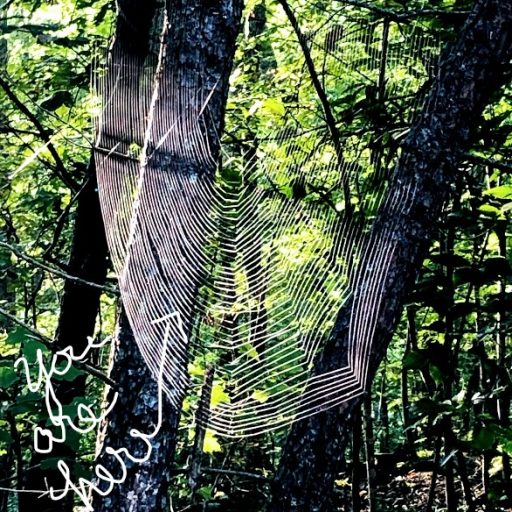
This, I believe: Writing is a life saver, a game changer and a creative endeavor. I use it to understand myself, the world around me and the universe which holds us all in her vision. I believe all things are connected. Just as each strand of a spider’s web effects the whole structure, so too each individual’s behavior matters. Words matter. Even thought matters.
Ours is a journey toward CENTER.
Located at each of the junctures or turning points on this big web of life is an opportunity for growth and an opening toward enlightenment. Free Will allows us to choose to “step up” to our higher selves or to remain stuck in repeating patterns or even to make a turn toward darkness. These “decision points” can be subtle but will definitely effect our life’s experiences and outcome. Without being mindfully aware of our choices, we can create damage and destruction for ourselves and others.
Sometimes, making the right choice looks like the hardest one, where we have to face an underlying fear. The good news is that at each of these junctures are light workers. Teachers, Mentors, Guides, Guardians, Angels, Seers or Healers who are assigned by GOD to be available to help but it is our choice to ask. Sometimes the way forward comes through the unknowing words of a friend or even a stranger. Words that were meant for our ears at a particular time, delivered by God’s messenger. It is my prayer that more people choose to follow the light, to do no harm, to protect and respect Mother Earth who has given her all for us and to keep following that path to the greater good. When we spend more time working on ourselves, we have no time to point fingers at others.
Writing is a powerful mode of transportation to self awareness which leads directly to a closer relationship with Creator God.
Donna M. Crow
In honor of the upcoming session of the Hindman Settlement School’s Appalachian Writer’s Workshop, I am revisiting an old, old journal entry written by my past self. That self was just embarking on a great new journey, walking through a door to her “second” adulthood. At the time of this writing, I was still unaware of all the plot twists and turns to come. If you read my introduction about there being “lights” positioned at the junctures of your life to show you the way forward, the Appalachian Writer’s Workshop was/ is a beacon and the people that are drawn to it are changed forever.
Though I’ve never been here before, I am known to this place. Familiarity brings memories that welcome me like a lost child come home. Spirits, past and present brush past me in their dancing circles and my head swims in pure delight. Their energy refreshes my own tired spirit and renews what I have lost, giving back that part of me, pushed away long ago. My ordinary words, inged with pronunciation, shamed out of me in school, find their home here in spectacular places of the heart, held solemnly in the souls of family whose bloodlines are the seams of coal connecting their lives to mine, comedy and tragedy. I am home.
Writers convene at the Hindman Settlement School Appalachian Writer’s Workshop every year for a full week of fellowship, lectures, workshopping their own writing and so much more. For the first time, I have joined them. Not knowing what to expect, I come prepared for anything, except what I find. Myself.
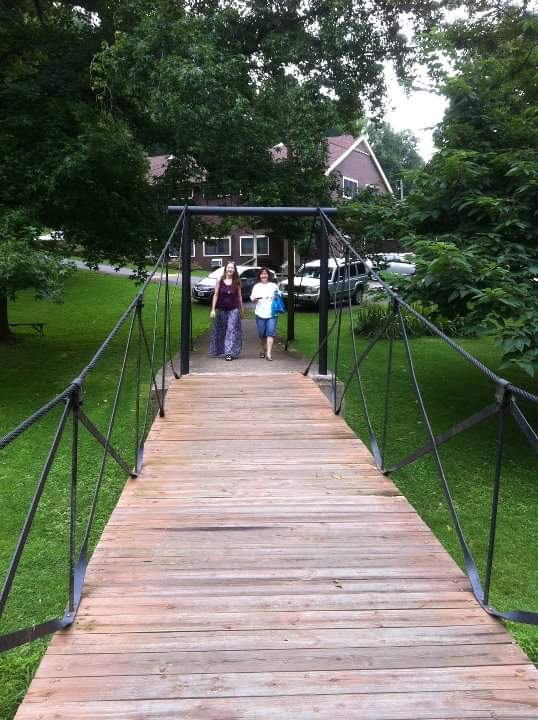
I cross the footbridge over Troublesome Creek and notice my reflection in the water, a girl of twelve, barefoot, squishing sand between her toes as water trickles around her ankles, tickled by minnows. She wants to know where I’ve been, why I left her behind. She is hurt, but she will forgive me.
A carved wood bench placed on the hill, a worthy pew in this mighty church. I sit with eyes closed, and hear my dad’s voice leading a song from the Old Baptist Hymnal for all to follow. The harmonies fall into place and fill the air around me, each voice a song of its own, in shaped notes of poetry, memoir or fiction.
I recognize old souls in new faces and together we study the walls that separate us from the other side, sharing footholds.
The dinner bell rings. Old and new, gather around the table to break bread, a communion of work and play, libation for the soul, a workshop, a reunion, a healing place.
 Old Soul Medicine Crow